The Day She Waited For Me
CHAPTER 5
The Day She Waited for Me
My mother spent time on hospice twice. The first time, she remained stable for so long that she was discharged. Hospice referred to patients like her as "hospice graduates." The company told me she was the first graduate they had ever had. When she entered hospice a second time, she would not graduate. The evening before her death, I noticed that her feeding formula was not moving properly through the tube. It did not appear to be entering or digesting in her stomach. Her abdomen felt extremely hard. I called the nurse and asked whether someone could come the following morning to evaluate her and perhaps administer an enema. My normal routine was to get my mother up at 1:30 in the afternoon. The nurse waited until that time to come. A woman who assisted with bathing was also present, along with a close friend and my roommate. I entered my mother's room to greet her as I did every day. At 1:37 p.m., seven minutes after I walked into the room, she took three deep breaths. Then she was gone.
The nurse looked at me. "Morgan, you know what that means when they breathe that way, don't you?" "That means she is going to pass, doesn't it?" I asked. "Yes," she said. My mother looked exactly as she had when I first entered the room.
She had waited until I arrived.
She waited for me until 1:37 p.m.
I had imagined for years that I would completely collapse when she died. Instead, I entered a kind of survival mode. I began organizing things and deciding what needed to happen next.
My roommate, a man from Sweden who had become very close to my mother, had never seen a deceased person before. Yet he offered to help the bathing attendant clean her, change her clothes, and dress her in an outfit I selected. It was one of the kindest gestures anyone could have made. I chose her clothes and then went into my bedroom to gather myself. I had already been grieving for years. Every time my mother lost another ability, I had lost another piece of her. This is known as anticipatory grief - the grief that begins before a person physically dies. By the time her body stopped breathing, I had already experienced thousands of smaller losses. The mortuary again told me it would take approximately four hours to arrive. I climbed into bed beside my mother. For those four hours, I stroked her arm, touched her face, kissed her, and remained beside her.
When the mortuary arrived, I left the room while they transferred her to the gurney. I had been advised that the transfer could be difficult to witness, and I did not want that image to become one of my final memories of her. I selected a beautiful urn. I also purchased the burial vault beside hers in Banning, California, so that one day I can be placed next to her. Before her urn was sealed inside the vault, I placed photographs with her and wrote what I call the letter of all letters. I put every feeling I could into that letter and placed it beside her urn.
Her memorial service was held in October. It was beautiful.
But afterward, I spiraled.
When the Caregiving Ended For fourteen years, my entire life had revolved around my mother. After she died, it felt as though eighty percent of my soul had been ripped away. I had no interest in anything. I did not want to be here. I wanted to be with her. I felt as though I was merely existing. The obvious sadness of depression eventually became less noticeable, perhaps because of medication, but I remained in bed for fifteen to seventeen hours a day. I slept deeply and could not seem to awaken from the exhaustion. My body had shut down. Doctors later explained that the extreme caregiving burnout, grief, depression, and years of physical and emotional stress had caused my system to collapse.
I had lived in a constant state of vigilance for so long that when my mother died, my body closed itself off. During my caregiving years, I rarely left the house. Friends did my grocery shopping. I could not walk through the front door without feeling that I needed to return immediately. I tried to hire caregivers so that I could have an occasional evening of respite, rest, or time with friends. The experiences were often disastrous. One caregiver broke my mother's arm while trying to move her. At the hospital, doctors told me that repairing it would require surgery and that she might not survive the anesthesia. Her arm was left hanging because surgery was considered too dangerous. One caregiver altered an eighty-dollar check to eight hundred dollars and cashed it at my bank. One fell asleep in my mother's bed. Another fell asleep on the sofa. Many simply sat beside her and played on their phones. Most had no idea how to perform tube feeding, operate a suction machine, safely move a rigid patient, or engage someone with advanced dementia. One man told me he had previously worked in construction and had taken the caregiving job because he needed additional money. He had apparently been hired with little meaningful preparation. He was the caregiver who broke my mother's arm.
I met a few exceptional caregivers, and I remain grateful for them. But far too many had received no practical training for the realities they were expected to face. I completed California's caregiver training course myself and became certified. Most of the training involved watching videos. The videos did not resemble reality. Watching someone demonstrate a transfer on a screen is not the same as physically lifting and positioning a human being. Watching a video about dementia is not the same as comforting a frightened woman who sees strangers in her mirror. Reading about choking is not the same as facing it in your living room. One time, my mother began to choke. I did not know how to perform the Heimlich maneuver. Thankfully, a friend who was present knew what to do and cleared the obstruction. That experience stayed with me.
The Birth of Angel Power
As I lay in bed after my mother's death, I began thinking about all the caregivers I had tried to hire and all the things that had gone wrong. I thought about the injuries, the neglect, the phones, the lack of knowledge, and the complete absence of engagement. Then I began thinking about the kind of company I wished had existed when I needed help. I wanted to create a home-care company that would change the way care was delivered. I wanted caregivers to receive real, hands-on instruction - not merely watch a series of videos. She Was Alive Inside | 16 I wanted every caregiver trained in first aid and the Heimlich maneuver. I wanted them to understand dementia, Parkinson's disease, transfers, feeding, communication, dignity, safety, and meaningful engagement.
I wanted to use new technology and every available advancement to improve the lives of clients and their families. Most importantly, I wanted to measure something that traditional hiring practices often overlook: Compassion. I began developing an assessment that could measure a person's level of compassion and empathy. Because a caregiver may possess certifications and still lack the emotional qualities necessary to care for another human being. In my opinion, if a person does not possess a meaningful level of compassion, that person should not be a caregiver. It is that simple.
My mother taught me that caregiving is not just about keeping someone clean, fed, and physically safe. It is about recognizing the person who remains inside. It is about talking to them even when their words no longer make sense. It is about protecting their dignity when they can no longer protect it themselves. It is about dressing them, including them, taking them into the sunlight, surrounding them with music, and reminding them that they are still part of the world.
It is about placing their toes in the sand. It is about taking an artist to see Van Gogh. It is about sitting beside them every night and saying: "You are safe. You are loved. You are not alone. We are a team, and we are going through this together." That is why I created Angel Power Home Care. It was born from my mother's life, from the fourteen years I spent beside her, from every mistake I made, every lesson I learned, every tear I cried behind a closed door, and every smile I saw in her eyes. My mother lost the ability to walk, eat, swallow, speak, blink, and care for herself. But she never lost her ability to feel love. She never lost her ability to experience joy.
And until the very end, she was alive inside.
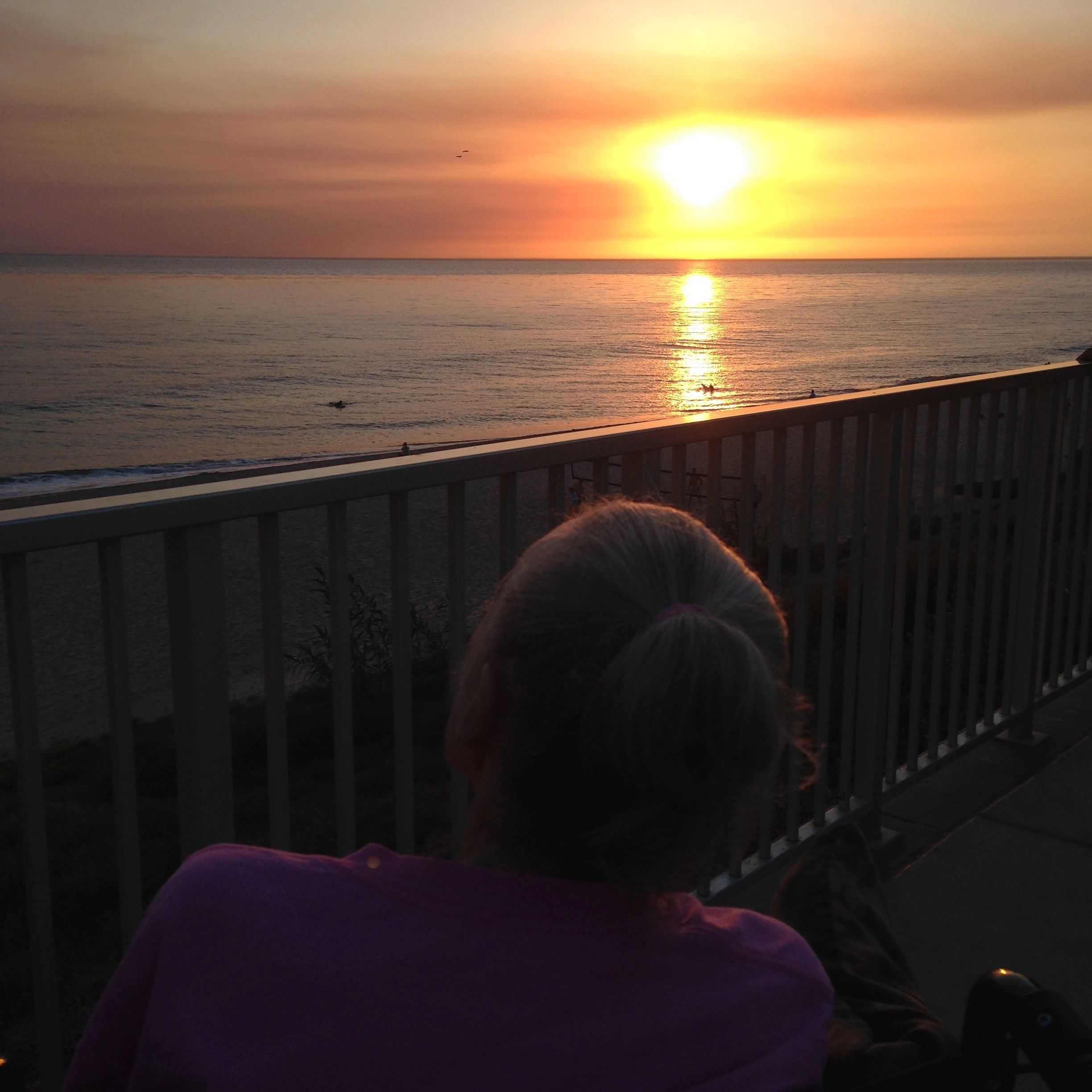
I Love You Mom

Copyright © 2026 Morgan Manning - All Rights Reserved.
Powered by ManningBot
This website uses cookies.
We use cookies to analyze website traffic and optimize your website experience. By accepting our use of cookies, your data will be aggregated with all other user data.